Pitching a Tent at The Basin...
Pittwater's Wild Escape for Campers and Day-Trippers
Ah, The Basin. That little slice of Pittwater paradise where the bush meets the bay, and the only traffic jam you'll encounter is a queue of wallabies hopping across your picnic rug. If you're a Pittwater local – or just pretending to be one while browsing properties on our site – you know this spot is the ultimate antidote to Sydney's hustle.
Whether you're packing a tent for an overnight adventure or just popping over for a day of sandy toes and salty air, The Basin in Ku-ring-gai Chase National Park is like nature's own holiday resort, minus the overpriced cocktails.
"Why bother with a five-star hotel when you can sleep under a million stars and wake up to a goanna eyeing your brekkie? It's evolution in action – or regression, depending on your view of camping."
Here at Pittwater Properties, we're all about celebrating the lifestyle that makes this corner of Sydney's Northern Beaches so irresistible. From waterfront estates to cosy beach shacks, our patch is defined by its access to these natural gems. So, let's dive into everything you need to know about The Basin: its history (older than your nan's fruitcake), how to get there (spoiler: no cars allowed), what to expect for camping or a quick visit, and tips to make your trip smoother than a calm Pittwater morning. We'll keep it factual, fun, and free of fluff – because who has time for that when there's a ferry to catch?
A Dip into History... How Old is The Basin, and When Did It 'Open'?
Right, let's channel our inner historian – or at least pretend we're on one of those ABC documentaries where they dig up old bones and get overly excited. The Basin isn't some newfangled glamping site; its roots go deep into Australia's story, starting with the Indigenous custodians who knew this place long before anyone thought to pitch a tent.
The land belongs to the Garigal people of the Guringai (or Ku-ring-gai) clan, part of the broader Dharug nation. For thousands of years, they've called this area home, with Pittwater as a bountiful larder of fish, shellfish, and game. Evidence of their presence is etched – literally – into the sandstone: rock engravings along The Basin track depict fish, animals, and ceremonial figures, some of the finest examples in the region. These sites aren't just doodles; they're sacred stories, reminders of a culture attuned to the tides and seasons.
European eyes first spied Pittwater in 1788 when Governor Arthur Phillip named it after British PM William Pitt. But The Basin itself? It slumbered as a quiet inlet until the late 19th century. Ku-ring-gai Chase National Park, Australia's second-oldest (after Royal National Park), was gazetted in 1894 to protect the area's natural beauty and Aboriginal heritage. That's when things got official – no more unregulated timber chopping or oyster farming willy-nilly.
As for when The Basin 'opened' as a campground? It's a bit fuzzy, like trying to recall last night's barbie after one too many tinnies. Records suggest it evolved as a recreation spot in the early 20th century, with Norfolk Island pines planted in the 1930s to shade the grassy flats. By the 1950s, it was a go-to for Sydney families escaping the suburbs, thanks to improved ferry services and a growing love for the great outdoors. No grand ribbon-cutting; it just sort of... happened, like most good Aussie traditions.
Today, managed by NSW National Parks and Wildlife Service, it's the only place to camp in the entire 14,928-hectare park. No permanent residents here – it's strictly for visitors, no Airbnb shenanigans or off-grid hermits. The Basin's 'age'? Well, the park turns 131 in 2025, but the campground feels timeless, a spot where history and holidays collide. If walls could talk – or in this case, rocks – they'd spin yarns of Indigenous ceremonies, colonial explorers, and countless family barbecues.
Getting There... Access Without the Aggravation
Now, the practical bit – because nothing kills the vibe like turning up and realising you've forgotten how to actually arrive. The Basin's charm lies in its inaccessibility to cars; it's like nature's way of saying, "Leave the road rage behind." No parking lots, no exhaust fumes – just pure Pittwater peace.
The easiest (and most scenic) way? Hop on the ferry from Palm Beach Wharf. Services run hourly from 9am to 5pm, Monday to Thursday, with more frequent trips on weekends and holidays. It's a 20-minute chug across the estuary, costing about $16.40 return for adults and less for kids. Park your car at the wharf (paid, time-limited spots) or catch a bus from the city – it's about 90 minutes from Sydney CBD. Pro tip: Drop your gear at the wharf first if you're laden like a pack mule; the ferry folks are legends for handling heavy loads.
Fancy a private entrance? Charter a water taxi – numbers are plastered at the wharf, and it'll set you back around $75 for a group of eight, gear included. Or, if you're boat-proud, motor in and anchor offshore; deep waters make it a yachtie's haven. For the fit and frugal, hike the 2.8km Basin Track from West Head Road carpark – steep, sweaty, but rewarding with views and those engravings en route. Just note: Gates lock at dusk (6pm-6am off daylight savings), so time your trek.
Once there, pay the landing fee if day-tripping: $3 adults, $2 kids, cash only at the wharf. It's a small price for paradise. And drones? Banned for safety – leave the buzzing to the bees.
Overnight Camping... Roughing It with a View
If you're the type who thinks a good night's sleep involves stars overhead and waves lapping nearby, The Basin's your spot. This isn't your bog-standard campground; it's a sprawling grassy field for up to 400 souls, with 114 unpowered, unmarked sites. Pitch where you please – first-come, first-served vibes – but book ahead online via NSW National Parks, especially in summer when it books out faster than Taylor Swift tickets. Fees? Around $18 per person per night, minimum two people, plus park entry if driving to the trailhead.
Facilities keep it civilised: Cold showers (bracing, character-building stuff), flush toilets, drinking water, gas BBQs, picnic tables, and even vending machines for snacks, coffee, and ice creams. No power points for your hairdryer, but there's a phone charging kiosk ($2 for 30 minutes) and fire pits for toasting marshmallows. Bring your own tent, sleeping bag, and esky – no caravans or generators, keeping it eco-friendly.
Rules are straightforward: Check-in after 10am, out by 10am; kids under 18 need an adult; no spear guns (safety first). It's family-oriented, so keep noise down after 10pm – rangers patrol and aren't afraid to evict party poopers. Groups over 40? Get written approval. And remember, it's BYO everything; ice and bait sold twice daily in peak season, but stock up in Palm Beach.
Funny story: One camper recounted goannas raiding their site – "Like Jurassic Park, but with sausages." Secure your food, folks. Overall, it's camping with a side of convenience – rough enough to feel adventurous, comfy enough not to swear off it forever.
Day Visits... A Quick Hit of Nature
Not ready to commit to canvas? The Basin shines as a day-trip destination. Ferry over in the morning, stake out a picnic spot, and be back for dinner. The wharf welcomes day visitors with open arms (and that $3 fee). Pack a hamper, spark up a free BBQ, and lounge on the grassy knolls or sheltered beach. The inland lagoon is kid-heaven – calm, shallow waters for paddling without waves or sharks.
Activities abound: Swim in the netted beach (safe from stingers), fish off the jetty, or explore trails. It's perfect for groups – weddings, school outings, or just a mates' barbie. Vending machines handle snacks if you forget the Tim Tams.
Facilities and Top Tip... Don't Be That Camper
Let's talk brass tacks – what you've got, and how not to muck it up. Facilities: Ample picnic tables, gas/electric BBQs (free!), cold showers, toilets, dishwashing sinks, and those handy vending machines. Public phone for emergencies, laundry tubs, and covered areas for rain. It's spotless, thanks to rangers – keep it that way.
Tips from the trenches:
- Book early: Peak season (summer, holidays) sells out; use the NPWS site.
- Pack smart: Torch, insect repellent, warm layers (nights cool off), eco-friendly toiletries. No fires except in pits; bring firewood or buy onsite.
- Wildlife wise: Wallabies and goannas are friendly but cheeky – secure food to avoid raids.
- Eco ethos: Leave no trace; bins provided, but recycle where possible.
- Weather watch: Check forecasts; park closes for fires or floods.
- Group gear: For big crews, consider a barge for kit transport.
One reviewer nailed it: "Stunning, but hustle to get there – drop gear first." Follow that, and you'll be golden.
What to Do...Beyond the Tent
Boredom? Not here. Start with water fun: Swim in the lagoon or beach, paddleboard Pittwater's calms, or fish for bream (no spears!). Bring a kayak or SUP for exploring coves.
On land: Hike the Basin Track (2-3hrs return) for views and engravings, or pedal bikes around the grounds. Spot wildlife – kookaburras laughing at your attempts to start a fire. Head to Barrenjoey Lighthouse for whale-watching (May-Nov).
Seasonal perks: Wildflowers in spring, whale spotting in winter. It's versatile – romantic picnics, kid adventures, or solo soul-searching.
Wildlife and Nature... Pittwater's Living Gallery
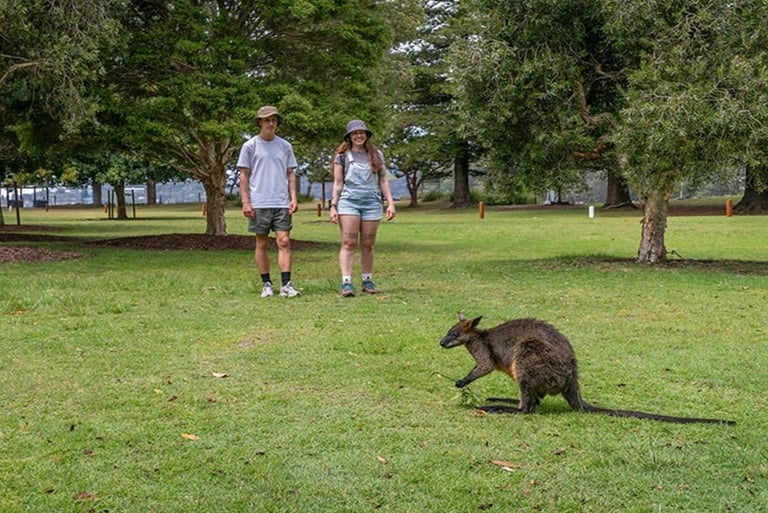
The Basin's stars aren't just the campers – it's the critters. Swamp wallabies bound through sites like they own the place (they kind of do), goannas sunbake like retired uncles, and bush turkeys scratch about. Kookaburras provide the soundtrack, while waterfowl paddle the lagoon.
The park's biodiversity is bonkers: Mangroves, heathlands, eucalypts – home to over 100 bird species and threatened plants. Respect it: No feeding wildlife, stick to tracks to avoid erosion.
Wrapping Up... Why The Basin Beckons
Whether it's a starry night in a tent or a sunny day by the bay, The Basin captures Pittwater's essence – wild, welcoming, and wonderfully close to home. At 131 years young (via the park), it's a timeless escape that boosts any property hunt in our area. Fancy a waterfront view without the rates? Camp here.
"Camping at The Basin? It's humanity's way of remembering we're just fancy apes with better gear."
Ready to explore? Book via nationalparks.nsw.gov.au, and pop by our site for Pittwater pads that make every day feel like a getaway.
Cheers to tents, tides, and tall tales!
Pitching a Tent at The Basin...
Pittwater's Wild Escape for Campers and Day-Trippers
Ah, The Basin. That little slice of Pittwater paradise where the bush meets the bay, and the only traffic jam you'll encounter is a queue of wallabies hopping across your picnic rug. If you're a Pittwater local – or just pretending to be one while browsing properties on our site – you know this spot is the ultimate antidote to Sydney's hustle.
Whether you're packing a tent for an overnight adventure or just popping over for a day of sandy toes and salty air, The Basin in Ku-ring-gai Chase National Park is like nature's own holiday resort, minus the overpriced cocktails. As Ricky Gervais might say, "Why bother with a five-star hotel when you can sleep under a million stars and wake up to a goanna eyeing your brekkie? It's evolution in action – or regression, depending on your view of camping."
Here at Pittwater Properties, we're all about celebrating the lifestyle that makes this corner of Sydney's Northern Beaches so irresistible. From waterfront estates to cosy beach shacks, our patch is defined by its access to these natural gems. So, let's dive into everything you need to know about The Basin: its history (older than your nan's fruitcake), how to get there (spoiler: no cars allowed), what to expect for camping or a quick visit, and tips to make your trip smoother than a calm Pittwater morning. We'll keep it factual, fun, and free of fluff – because who has time for that when there's a ferry to catch?
A Dip into History... How Old is The Basin, and When Did It 'Open'?
Right, let's channel our inner historian – or at least pretend we're on one of those BBC documentaries where they dig up old bones and get overly excited. The Basin isn't some newfangled glamping site; its roots go deep into Australia's story, starting with the Indigenous custodians who knew this place long before anyone thought to pitch a tent.
The land belongs to the Garigal people of the Guringai (or Ku-ring-gai) clan, part of the broader Dharug nation. For thousands of years, they've called this area home, with Pittwater as a bountiful larder of fish, shellfish, and game. Evidence of their presence is etched – literally – into the sandstone: rock engravings along The Basin track depict fish, animals, and ceremonial figures, some of the finest examples in the region. These sites aren't just doodles; they're sacred stories, reminders of a culture attuned to the tides and seasons. As Gervais might quip, "Humans have been marking their territory here for millennia – we just swapped spears for selfies."
European eyes first spied Pittwater in 1788 when Governor Arthur Phillip named it after British PM William Pitt. But The Basin itself? It slumbered as a quiet inlet until the late 19th century. Ku-ring-gai Chase National Park, Australia's second-oldest (after Royal National Park), was gazetted in 1894 to protect the area's natural beauty and Aboriginal heritage. That's when things got official – no more unregulated timber chopping or oyster farming willy-nilly.
As for when The Basin 'opened' as a campground? It's a bit fuzzy, like trying to recall last night's barbie after one too many tinnies. Records suggest it evolved as a recreation spot in the early 20th century, with Norfolk Island pines planted in the 1930s to shade the grassy flats. By the 1950s, it was a go-to for Sydney families escaping the suburbs, thanks to improved ferry services and a growing love for the great outdoors. No grand ribbon-cutting; it just sort of... happened, like most good Aussie traditions.
Today, managed by NSW National Parks and Wildlife Service, it's the only place to camp in the entire 14,928-hectare park. No permanent residents here – it's strictly for visitors, no Airbnb shenanigans or off-grid hermits. The Basin's 'age'? Well, the park turns 131 in 2025, but the campground feels timeless, a spot where history and holidays collide. If walls could talk – or in this case, rocks – they'd spin yarns of Indigenous ceremonies, colonial explorers, and countless family barbecues.
Getting There... Access Without the Aggravation
Now, the practical bit – because nothing kills the vibe like turning up and realising you've forgotten how to actually arrive. The Basin's charm lies in its inaccessibility to cars; it's like nature's way of saying, "Leave the road rage behind." No parking lots, no exhaust fumes – just pure Pittwater peace.
The easiest (and most scenic) way? Hop on the ferry from Palm Beach Wharf. Services run hourly from 9am to 5pm, Monday to Thursday, with more frequent trips on weekends and holidays. It's a 20-minute chug across the estuary, costing about $16.40 return for adults and less for kids. Park your car at the wharf (paid, time-limited spots) or catch a bus from the city – it's about 90 minutes from Sydney CBD. Pro tip: Drop your gear at the wharf first if you're laden like a pack mule; the ferry folks are legends for handling heavy loads.
Fancy a private entrance? Charter a water taxi – numbers are plastered at the wharf, and it'll set you back around $75 for a group of eight, gear included. Or, if you're boat-proud, motor in and anchor offshore; deep waters make it a yachtie's haven. For the fit and frugal, hike the 2.8km Basin Track from West Head Road carpark – steep, sweaty, but rewarding with views and those engravings en route. Just note: Gates lock at dusk (6pm-6am off daylight savings), so time your trek.
Once there, pay the landing fee if day-tripping: $3 adults, $2 kids, cash only at the wharf. It's a small price for paradise. And drones? Banned for safety – leave the buzzing to the bees. As Gervais would deadpan, "Access by boat or boot – because who needs a car when you've got legs or a captain's hat?"
Overnight Camping... Roughing It with a View
If you're the type who thinks a good night's sleep involves stars overhead and waves lapping nearby, The Basin's your spot. This isn't your bog-standard campground; it's a sprawling grassy field for up to 400 souls, with 114 unpowered, unmarked sites. Pitch where you please – first-come, first-served vibes – but book ahead online via NSW National Parks, especially in summer when it books out faster than Taylor Swift tickets. Fees? Around $18 per person per night, minimum two people, plus park entry if driving to the trailhead.
Facilities keep it civilised: Cold showers (bracing, character-building stuff), flush toilets, drinking water, gas BBQs, picnic tables, and even vending machines for snacks, coffee, and ice creams. No power points for your hairdryer, but there's a phone charging kiosk ($2 for 30 minutes) and fire pits for toasting marshmallows. Bring your own tent, sleeping bag, and esky – no caravans or generators, keeping it eco-friendly.
Rules are straightforward: Check-in after 10am, out by 10am; kids under 18 need an adult; no spear guns (safety first). It's family-oriented, so keep noise down after 10pm – rangers patrol and aren't afraid to evict party poopers. Groups over 40? Get written approval. And remember, it's BYO everything; ice and bait sold twice daily in peak season, but stock up in Palm Beach.
Funny story: One camper recounted goannas raiding their site – "Like Jurassic Park, but with sausages." Secure your food, folks. Overall, it's camping with a side of convenience – rough enough to feel adventurous, comfy enough not to swear off it forever.
Day Visits... A Quick Hit of Nature
Not ready to commit to canvas? The Basin shines as a day-trip destination. Ferry over in the morning, stake out a picnic spot, and be back for dinner. The wharf welcomes day visitors with open arms (and that $3 fee). Pack a hamper, spark up a free BBQ, and lounge on the grassy knolls or sheltered beach. The inland lagoon is kid-heaven – calm, shallow waters for paddling without waves or sharks.
Activities abound: Swim in the netted beach (safe from stingers), fish off the jetty, or explore trails. It's perfect for groups – weddings, school outings, or just a mates' barbie. Vending machines handle snacks if you forget the Tim Tams. Gervais quip: "A day at The Basin? It's like therapy, but cheaper and with better views than your shrink's office."
Facilities and Top Tip... Don't Be That Camper
Let's talk brass tacks – what you've got, and how not to muck it up. Facilities: Ample picnic tables, gas/electric BBQs (free!), cold showers, toilets, dishwashing sinks, and those handy vending machines. Public phone for emergencies, laundry tubs, and covered areas for rain. It's spotless, thanks to rangers – keep it that way.
Tips from the trenches:
- Book early: Peak season (summer, holidays) sells out; use the NPWS site.
- Pack smart: Torch, insect repellent, warm layers (nights cool off), eco-friendly toiletries. No fires except in pits; bring firewood or buy onsite.
- Wildlife wise: Wallabies and goannas are friendly but cheeky – secure food to avoid raids.
- Eco ethos: Leave no trace; bins provided, but recycle where possible.
- Weather watch: Check forecasts; park closes for fires or floods.
- Group gear: For big crews, consider a barge for kit transport.
One reviewer nailed it: "Stunning, but hustle to get there – drop gear first." Follow that, and you'll be golden.
What to Do...Beyond the Tent
Boredom? Not here. Start with water fun: Swim in the lagoon or beach, paddleboard Pittwater's calms, or fish for bream (no spears!). Bring a kayak or SUP for exploring coves.
On land: Hike the Basin Track (2-3hrs return) for views and engravings, or pedal bikes around the grounds. Spot wildlife – kookaburras laughing at your attempts to start a fire. Head to Barrenjoey Lighthouse for whale-watching (May-Nov).
Seasonal perks: Wildflowers in spring, whale spotting in winter. It's versatile – romantic picnics, kid adventures, or solo soul-searching.
Wildlife and Nature... Pittwater's Living Gallery
The Basin's stars aren't just the campers – it's the critters. Swamp wallabies bound through sites like they own the place (they kind of do), goannas sunbake like retired uncles, and bush turkeys scratch about. Kookaburras provide the soundtrack, while waterfowl paddle the lagoon.
The park's biodiversity is bonkers: Mangroves, heathlands, eucalypts – home to over 100 bird species and threatened plants. Respect it: No feeding wildlife, stick to tracks to avoid erosion. Gervais-style: "Wallabies staring at your tent? That's nature's way of saying, 'Nice setup, but mine's rent-free.'"
Wrapping Up... Why The Basin Beckons
Whether it's a starry night in a tent or a sunny day by the bay, The Basin captures Pittwater's essence – wild, welcoming, and wonderfully close to home. At 131 years young (via the park), it's a timeless escape that boosts any property hunt in our area. Fancy a waterfront view without the rates? Camp here. As Gervais might conclude, "Camping at The Basin? It's humanity's way of remembering we're just fancy apes with better gear."
Ready to explore? Book via nationalparks.nsw.gov.au, and pop by our site for Pittwater pads that make every day feel like a getaway.
Cheers to tents, tides, and tall tales!

